Search engine optimization has never been a static discipline. Every time Google rolls out a significant update – from Panda to Penguin, from BERT to the Helpful Content System – the rules shift, and websites that adapt early gain the upper hand. In 2026, we are witnessing arguably the most transformative shift yet: the rise of Web MCP (Web Model Context Protocol) and its growing intersection with how Google evaluates and ranks websites.
What Is Web MCP and Why Does It Matter for SEO?
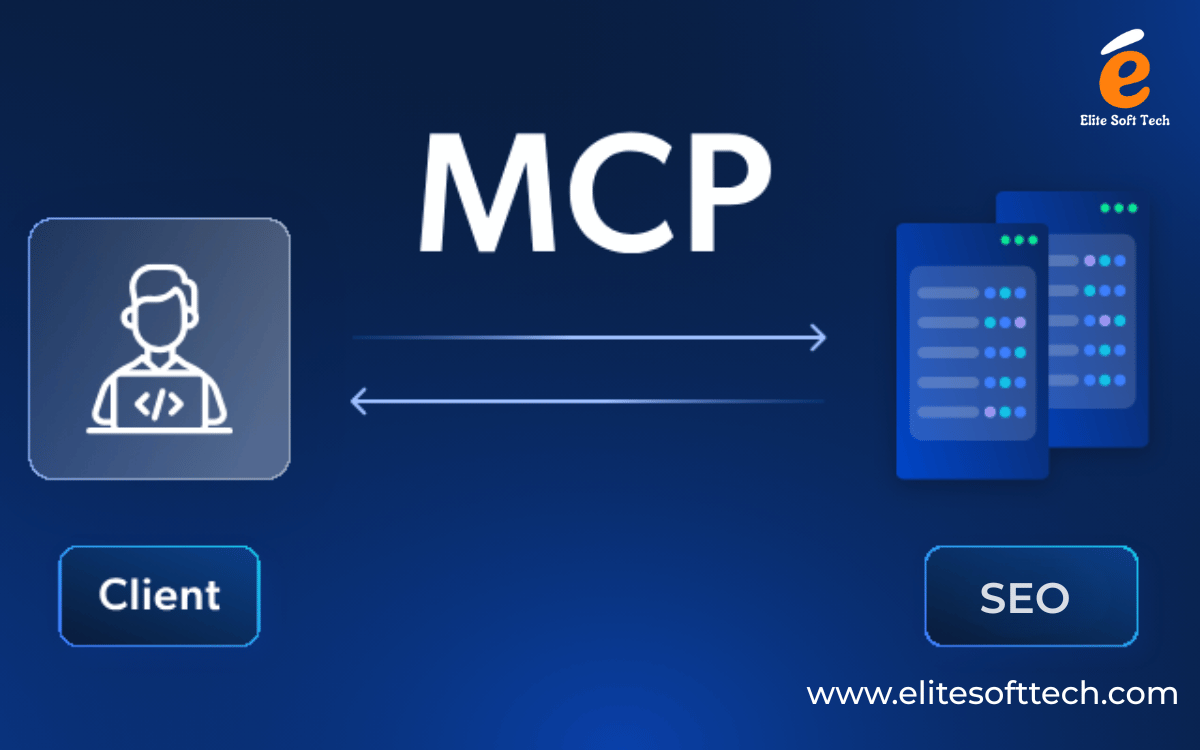
Web MCP – short for Web Model Context Protocol – is a proposed web standard introduced by engineers at Google and Microsoft under the W3C Web Machine Learning Community Group. At its core, Web MCP aims to provide a standard way for exposing structured tools, ensuring AI agents can perform actions on your site with increased speed, reliability, and precision. Chrome Developers Instead of an AI agent guessing how to use your website by analyzing screenshots, Web MCP lets the website tell the agent exactly what tools are available and how to invoke them.
Instead of relying on a slow and fragile approach of capturing screenshots and guessing what to click on, Web MCP replaces this guessing game with structured data – effectively converting a website into a set of capabilities.
Currently available as an early preview in Chrome 146, Web MCP proposes two complementary APIs:
- Declarative API – For standard actions that can be defined directly in HTML forms (contact forms, sign-ups, support tickets, searches).
- Imperative API – For dynamic interactions requiring JavaScript execution, such as product filters, complex e-commerce flows, and multi-step booking processes.
These two APIs serve as a bridge between websites and AI agents. The Declarative API handles standard actions that can be defined directly in existing HTML forms, while the Imperative API handles more complex, dynamic interactions that require JavaScript execution – where developers define richer tool schemas running entirely client-side in the browser
You can explore Google’s official documentation and join the Early Preview Program at developer.chrome.com/blog/webmcp-epp. Google has also launched the Google Analytics MCP server, which lets you connect your Analytics data directly to an LLM – enabling AI-powered data analysis, custom agents, and smarter reporting: developers.google.com/analytics/devguides/MCP.
The Google Update Connection: Why “Agent-Ready” Sites Will Win
Google has been incorporating AI into its search engine for years with RankBrain, BERT, MUM, and now AI Overviews (SGE). Each iteration has brought the divide between machine understanding and human intent closer. Web MCP does this at a much accelerated pace.
The technology change involved here is considerable. Going from a vision-based model to a Web MCP-based model promises to bring lower latency (no waiting for screenshots to be processed), higher accuracy with structured JSON data, and lower costs as text-based schemas are much cheaper to process than sending high-definition images to an LLM.
Rather than acting as a direct ranking factor today, Web MCP is best understood as the next frontier of technical SEO. AI-agent traffic could become as important as traditional search traffic, and early adopters will benefit most. SEO Specialist India Websites that invest now in the foundations Web MCP requires – clean forms, stable UX, semantic HTML – are building the same infrastructure that Google’s core ranking algorithm already rewards.
Key SEO Ranking Factors That Align With Web MCP Readiness
1. Technical SEO and Crawlability
Technical SEO is the silent ranking factor. When it is correct, nobody notices. When it is wrong, everything suffers. Page experience, crawlability, and clean indexing will continue to be crucial in 2026 because Google’s systems will not reward pages that it cannot access, parse, or trust. ClickRank
With regards to Web MCP, semantic HTML is crucial because it is understandable not only by crawlers but also by AI agents. URL structures and Java Scripts should not restrict access to primary functionality. When your dynamic interactions are not correctly exposed via the Imperative API, AI agents will not understand them, and therefore discoverability of AI agents and technical SEO will be impacted.
2. Core Web Vitals: LCP, INP, and CLS
Google updated Core Web Vitals in 2026, making Interaction to Next Paint (INP) and scroll performance metrics critical for ranking. These metrics are measured using real Chrome user data, not just lab tests.
Core Web Vitals don’t replace content or authority, but they shape how users feel when they land — and that directly affects satisfaction signals. A clean, fast, stable page is both a better human experience and a better agent experience. Optimizing for Core Web Vitals is one of the most impactful dual-purpose investments you can make.
3. Clean Form Structure and Stable UX Flows
Clean structure and labels, predictable input, and stable redirects are no longer “nice to have.” Multi-step popups, inconsistent state, and heavy JS changes not only hinder humans, they also break agent workflows. Techpullers
The Declarative API at Web MCP is literally built on top of existing HTML forms. If you already have good structure in your forms, you may already be most of the way there with minimal additional work.
4. Content Quality and Search Intent Alignment
Ranking is no longer driven by keyword manipulation and volume of content published. Rather, it is driven by whether or not a page clearly and consistently provides information that satisfies user intent. Quad cubes
In 2026, Google will evaluate intent satisfaction depth: did we answer the user’s question on that page? Does it satisfy them on that page? Generic and redundant information does not pass this satisfaction test and will fail regardless of technical and on-page optimization efforts. Quadcubes
Well-structured and clear content makes it easier for AI agents to find the right tool and information to surface on behalf of users for Web MCP.
5. E-E-A-T: Experience, Expertise, Authoritativeness, Trustworthiness
Google’s algorithms use AI to verify author and entity information. Sites with anonymous content, vague statements, and unverified expertise have difficulty surfacing in SGE and competitive search engine results. Quad cubes
In Web MCP, E-E-A-T is a trust indicator for Google’s algorithms and for AI agents determining which sites to query on behalf of users. Verifying authority through bios, credentials, citations, and brand presence is a long-term play with compounding interest.
6. Structured Data and Schema Markup
Schema markup helps Google understand content faster and improves eligibility for featured snippets and AI Overview highlights. In the Web MCP era, this principle extends further. Structured data acts as a semantic map, telling automated systems exactly what your page contains, what actions are available, and what to expect from an interaction. Implementing schema for products, FAQs, events, and services is one of the clearest dual-purpose investments available to SEO practitioners today.
7. Backlinks and Topical Authority
Backlinks act as a “vote of trust” by earning links from credible and trustworthy websites within the same niche. High-quality backlinks provide much more significant value than low-quality ones, and a low-quality backlink profile runs the risk of getting penalized.
Backlinks remain a major factor, but Google now evaluates contextual relevance more than ever before. Combined with topical authority – built through pillar pages and keyword clusters – a strong backlink profile signals both to Google’s algorithm and to AI agent ecosystems that your site is a trusted, expert resource worth surfacing.
How to Prepare Your Website for the Web MCP Era
ou don’t need to wait for Web MCP to reach full production status to start. The preparation mirrors proven SEO best practices:
- Audit your HTML forms – Clean up labels, fix broken flows, and eliminate redirect traps.
- Optimize Core Web Vitals – Address LCP, INP, and CLS issues using real-device data.
- Implement structured data – Add and validate schema markup across key page types.
- Create intent-matched content – Write with depth and clarity, solving real user problems completely.
- Build E-E-A-T signals – Establish author credentials, brand consistency, and verifiable expertise.
- Join the Chrome Early Preview Program – Access Web MCP documentation and demos directly: developer.chrome.com/blog/webmcp-epp.
- Explore Google Analytics MCP – Connect your analytics data to AI for smarter, faster insights: developers.google.com/analytics/devguides/MCP.
Final Thoughts
Web MCP is the perfect tool to align the current web with the new reality of not just humans consuming it. DEV Community Like mobile optimization before it, the websites that treat this shift as an opportunity rather than an obligation will earn compounding advantages in both search rankings and AI-agent discoverability.
The smart move isn’t to wait for the final spec. The smart move is to fix the foundations now: clean forms, stable UX flows, fast pages, and clear site structure.
The agentic web is evolving fast. Make sure your website evolves with it.
References: Google Analytics MCP Server · WebMCP Early Preview Program