The search environment is evolving more quickly than before. You’re seeing the rise of Generative Engine Optimization (GEO) if you’ve seen ChatGPT, Perplexity, or Google’s AI Overviews providing direct answers to questions rather than merely listing links. Understanding this change is no longer optional for business owners looking for an SEO company nearby or wondering if their current approach is still effective.
What’s Actually Changing in Search?
Do you recall the days when landing on Google’s first page was the ultimate goal? We’re rewriting that playbook. Climbing those blue links was the main goal of traditional search engine optimization. These days, AI-driven search engines respond to queries in a conversational manner, frequently without requiring users to click through to any websites.
This is crucial, particularly for small business owners. While many businesses are still stuck in 2019, the top best SEO agencies for small business are already changing their tactics.
SEO: The Foundation That Still Matters
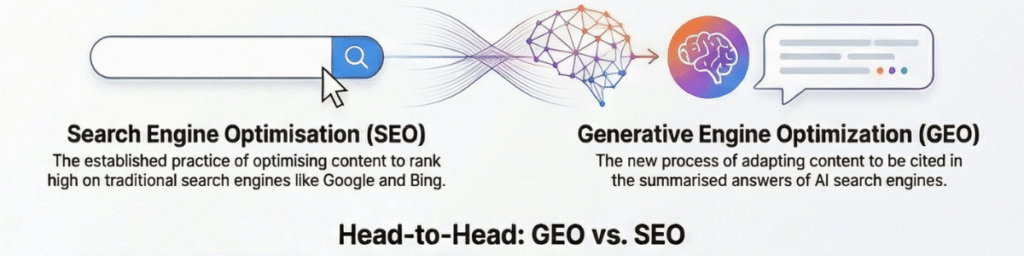
Let’s be clear: SEO isn’t dead. It’s evolving. Traditional SEO focuses on:
- Keywords and rankings: Getting your site visible when people search specific terms
- Backlinks: Building authority through links from other reputable sites
- Technical optimization: Fast loading speeds, mobile responsiveness, clean code
- Content targeting search intent: Answering what people type into search bars
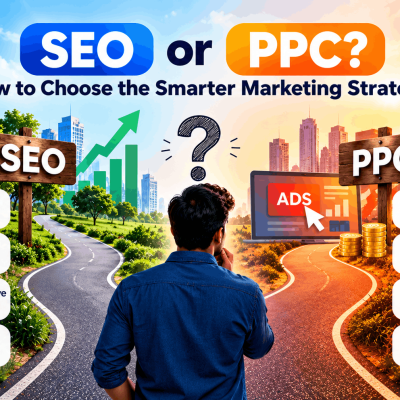
SEO companies for small business have perfected these fundamentals over the past two decades. They work. But they’re no longer enough on their own.
Think about the last time you asked ChatGPT a question. Did you click any links, or did you just read the answer it gave you? That’s the challenge SEO faces now.
Enter GEO: Optimizing for AI Answers
Generative Engine Optimization is about making sure AI tools cite, reference, and recommend your content when answering questions. Instead of optimizing for search result rankings, you’re optimizing to be the source AI engines trust and quote.
Here’s what makes GEO different:
You are no longer in the running for positions 1 through 10. When someone in your industry asks a question, you’re vying to be the reliable source that AI consults. Will an AI chatbot mention you when someone asks it about marketing tactics, legal advice, or restaurant recommendations?
Keywords are not as important as context. AI search engines are more adept than conventional algorithms at comprehending subtlety, synonyms, and intent. Instead of focusing on keyword density, they are searching for comprehensive responses, depth, and expertise.
Credibility and citation become crucial. The best SEO agency nowadays is aware that being cited by AI engines necessitates the same credibility indicators used by scholars: authoritative content, cited sources, and obvious expertise.
Real Differences That Impact Your Business
Let me give you a practical example. Say you run a local bakery.
Conventional SEO strategy: search for “bakery near me,” “custom cakes in [city],” and “wedding cake delivery.” Get Google reviews, enhance your Google Business Profile, and increase local citations.
GEO methodology: Provide thorough content that addresses queries such as “What’s the difference between buttercream and fondant?” and “How far in advance should I order a wedding cake?” in a way that AI engines will quote.
Both are necessary: Right now, the person looking for “bakery near me” wants local results. However, the person who asks an AI “What should I consider when choosing a wedding cake vendor?” may not even be aware that your bakery even exists. Before they even conduct a search, you are taken into consideration if the AI suggests you as an expert source.
What the Best SEO Agencies Are Doing Differently Now
The best SEO agencies for small business aren’t abandoning fundamentals. They’re layering GEO strategies on top:
- Creating genuinely helpful, comprehensive content instead of thin keyword-stuffed pages
- Building real authority through original research, case studies, and demonstrated expertise
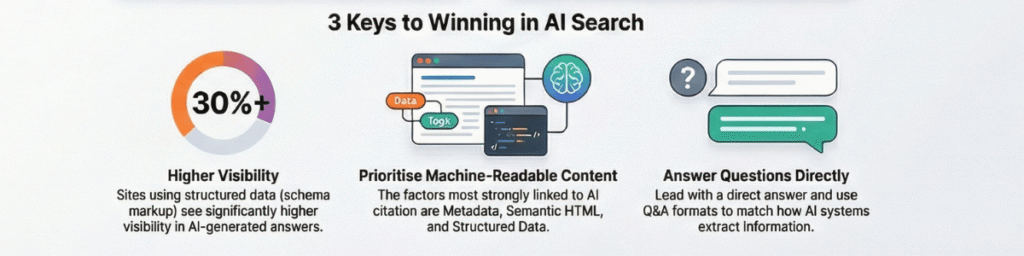
- Structuring information clearly so both humans and AI can easily understand and reference it
- Focusing on E-E-A-T (Experience, Expertise, Authoritativeness, Trustworthiness) more than ever
- Monitoring AI citations the way they used to monitor rankings
If you’re looking for an SEO company near me, ask them how they’re adapting to AI search. If they’re only talking about keywords and backlinks, they’re not thinking ahead.
Practical Steps You Can Take Today
You don’t need to completely overhaul your strategy tomorrow. Start here:
Examine your best content. Is it really the best response on the subject? If you were writing a research paper, would you cite it? If not, make it larger.
Provide full answers to questions rather than just keywords. Rather than focusing on “email marketing tips,” develop a comprehensive guide that provides practical, step-by-step guidance on “How do I build an email list from scratch?”
Incorporate signals of credibility. AI is informed that your content is reliable and worthy of citation by author bios, sources, data, examples, and case studies.
Make your knowledge clear. Make it obvious on your website whether you are a certified professional, have years of experience, or can provide actual results.
Stay technically sound. AI crawlers still need to access, read, and understand your content. Fast sites with clean code and clear structure remain important.
The Hybrid Future: Why You Need Both
What business owners should know is that there is no way to decide between GEO and SEO. Both must cooperate with one another.
Direct search traffic, local visibility, and quick conversions are still generated by traditional SEO. GEO positions you as the go-to authority in your industry, increases your reach into AI-assisted searches, and establishes long-term authority.
The top SEO companies are already using this hybrid strategy to assist their clients. In addition to making sure AI engines can locate, comprehend, and cite their content, they are optimizing for Google’s traditional search.
Finding the Right Partner
Whether you’re searching for SEO companies for small business or evaluating your current agency, ask these questions:
- How are you adapting to AI-powered search?
- Do you track AI citations or mentions of our brand?
- What’s your approach to building genuine expertise and authority?
- How do you balance traditional SEO with GEO strategies?
The agencies that can’t answer these questions confidently are stuck in the past. The landscape has changed. Your strategy needs to change with it.
The Bottom Line
The basis for online visibility was established by SEO. The next floor is being built by GEO. Instead of picking one over the other, astute companies do both.
Now is the time to assess whether your current strategy is future-proof if you run a small business. As more people rely on AI to answer their questions and make decisions, companies that adapt early will have a big advantage.