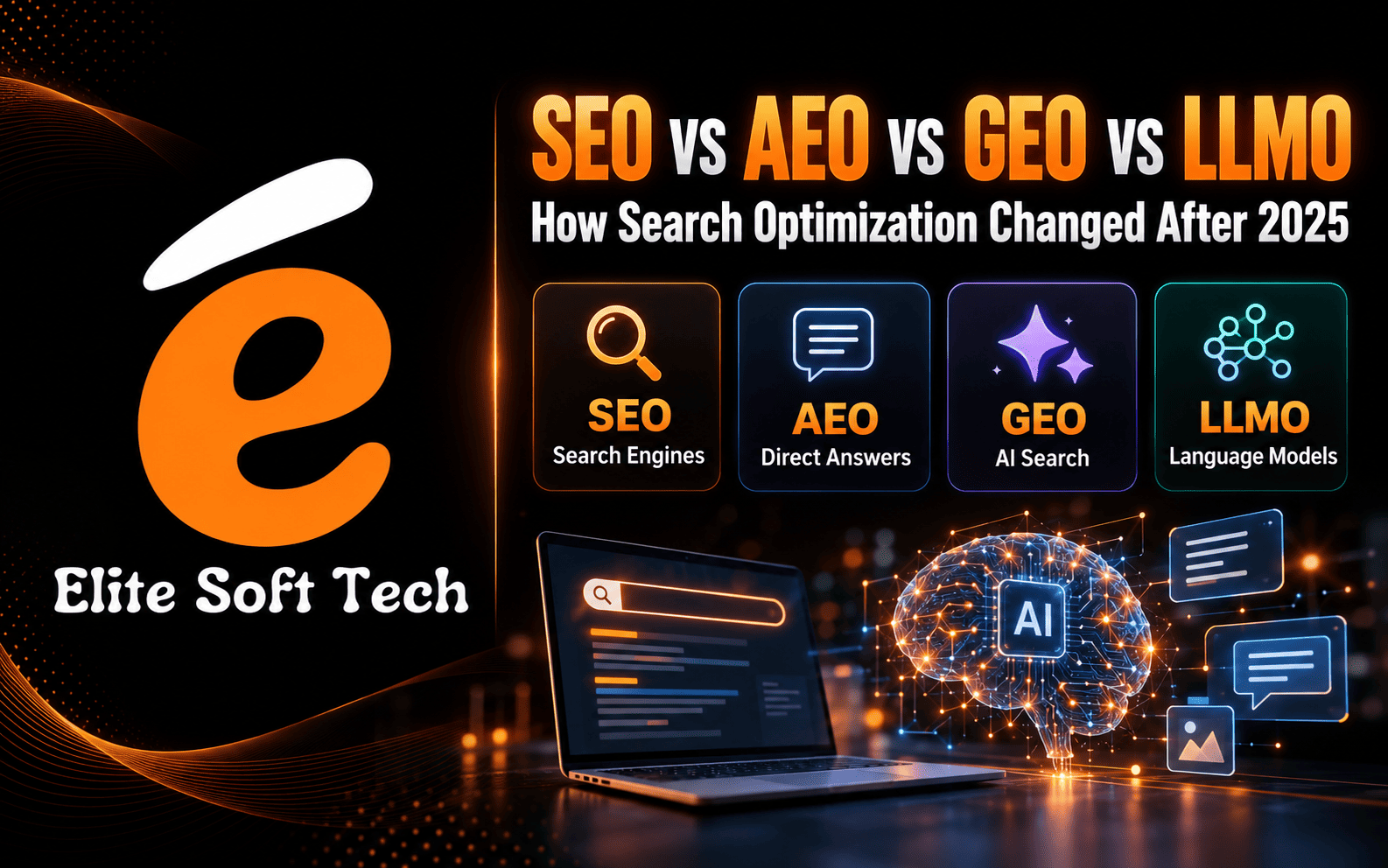
Before 2025, most bloggers worked on only one thing: SEO. Pick a keyword, write the article, build links, and wait for Google traffic. After 2025, that is not enough. People now get answers from Google AI Overviews, ChatGPT, Gemini, Perplexity, Copilot, and voice assistants. Each of these works differently, so new terms have appeared: AEO, GEO, and LLMO. In this guide, I explain each term in simple words, show the difference between SEO before 2025 and after 2025, and give you a practical plan to optimise your blog for everything Before 2025: We Worked Only on SEO SEO (Search Engine Optimisation) means improving your website so it ranks higher in search engines like Google and Bing. Before 2025, the routine looked like this: The result you measured was simple: rankings, clicks, and traffic. One channel, one goal. After 2025: SEO + AEO + GEO + LLMO Search is no longer one box with ten links. Today people ask questions to AI chatbots, read AI summaries on the results page, and use voice search. Your content must work in all these places. Here is what each term means. 1. SEO: Search Engine Optimisation SEO is still the foundation. It helps your pages get crawled, indexed, and ranked. Good keywords, quality content, internal links, fast loading, and mobile-friendly design still matter. AI tools often pull from pages that already rank well, so weak SEO weakens everything else. 2. AEO: Answer Engine Optimisation AEO means optimising your content so it becomes the direct answer to a question. This covers featured snippets, “People Also Ask” boxes, AI Overviews, and voice assistants. How to do AEO: 3. GEO: Generative Engine Optimisation GEO means optimising your content so generative AI tools mention or cite your brand in their answers. Tools like ChatGPT, Gemini, Perplexity, and Google’s AI Overviews generate a response by combining information from many sources. GEO helps you become one of those sources. How to do GEO: 4. LLMO: LLM Optimisation LLMO (also called AI optimisation or AIO) focuses on how large language models understand your content and your brand. LLMs learn from the web and also retrieve live pages when answering. If your brand is mentioned often, clearly, and positively across trusted places, models are more likely to recommend you. How to do LLMO: 5. Other Terms You May See Some of these terms overlap, and the industry has not fully agreed on the definitions yet. The practical idea is the same: be useful, clear, trusted, and easy for both humans and machines to understand. Quick Comparison: Before 2025 vs After 2025 Area Before 2025 After 2025 Optimization focus SEO only SEO + AEO + GEO + LLMO Where users search Google, Bing Google, AI Overviews, ChatGPT, Gemini, Perplexity, voice, YouTube Content style Keyword-focused, long Answer-focused, clear, original Main goal Rank #1 and get clicks Rank, get cited, and build brand Authority Backlinks Backlinks + brand mentions + E-E-A-T Key metric Rankings and traffic Traffic, impressions, citations, brand searches Content format Mostly text Text, video, FAQ, tables, data Why This Change Happened 1. AI answers on the results page. Google AI Overviews and AI chatbots give summaries directly, so users often do not need to click. 2. Zero-click searches. For simple questions, many people get the answer and leave. Basic “what is X” content loses clicks first. 3. Quality and trust. Google continues to push against low-value, mass-produced content. Experience, expertise, authoritativeness, and trust (E-E-A-T) guide how quality is judged. 4. New search habits. Younger users ask full questions to AI tools, use video platforms, and trust community discussions. A Practical Plan for Bloggers (All-in-One Strategy) Step 1: Fix your SEO foundation Do keyword research based on search intent. Use a clear title, a unique meta description, clean permalinks, internal links, and image alt text. Submit your sitemap in Google Search Console and Bing Webmaster Tools. Step 2: Write for answers (AEO) Start every section with a direct answer, then explain. Add FAQs to every post. Use headings that match real questions people ask. Step 3: Add original value (GEO) AI tools can summarise what is already everywhere. They have a reason to cite you only when you add something new: your own tests, screenshots, case studies, numbers, or opinions from real experience. Step 4: Build your brand (LLMO) Create a strong About page and author profile. Be active on YouTube, LinkedIn, X, Reddit, and Quora. Aim to have your blog name mentioned in helpful contexts, not spam. Step 5: Use clear structure Use H2 and H3 headings, short paragraphs, bullet points, and tables. Clear structure helps readers, snippets, and AI systems pull the right part of your page. Step 6: Consider schema markup Structured data such as Article, FAQ, and Author helps search engines understand your page. Note that Google now shows FAQ rich results only for a limited set of sites, but the markup can still help with clarity. Blogger has limited built-in support, so you may need to add it manually to your theme or post HTML. Step 7: Allow AI crawlers deliberately Check your robots.txt. If you want AI tools to read and cite your content, do not block their crawlers by mistake. If you prefer to restrict some of them, make that a conscious choice. Step 8: Improve speed and mobile experience Use a lightweight Blogger theme, compress images, limit widgets, and keep ads from pushing content down. Most readers are on mobile. Step 9: Update content regularly Refresh top posts with new facts and examples. Fresh, accurate content is more likely to be trusted by both search engines and AI tools. Step 10: Track the right numbers Along with clicks and rankings, watch impressions, branded searches, and referral traffic from AI tools in your analytics. Occasionally ask AI tools questions in your niche and check whether your site appears. Mistakes to Avoid Final Thoughts Before 2025, bloggers focused on one task: SEO. After 2025, the work expanded to SEO, AEO, GEO, and LLMO, but the core