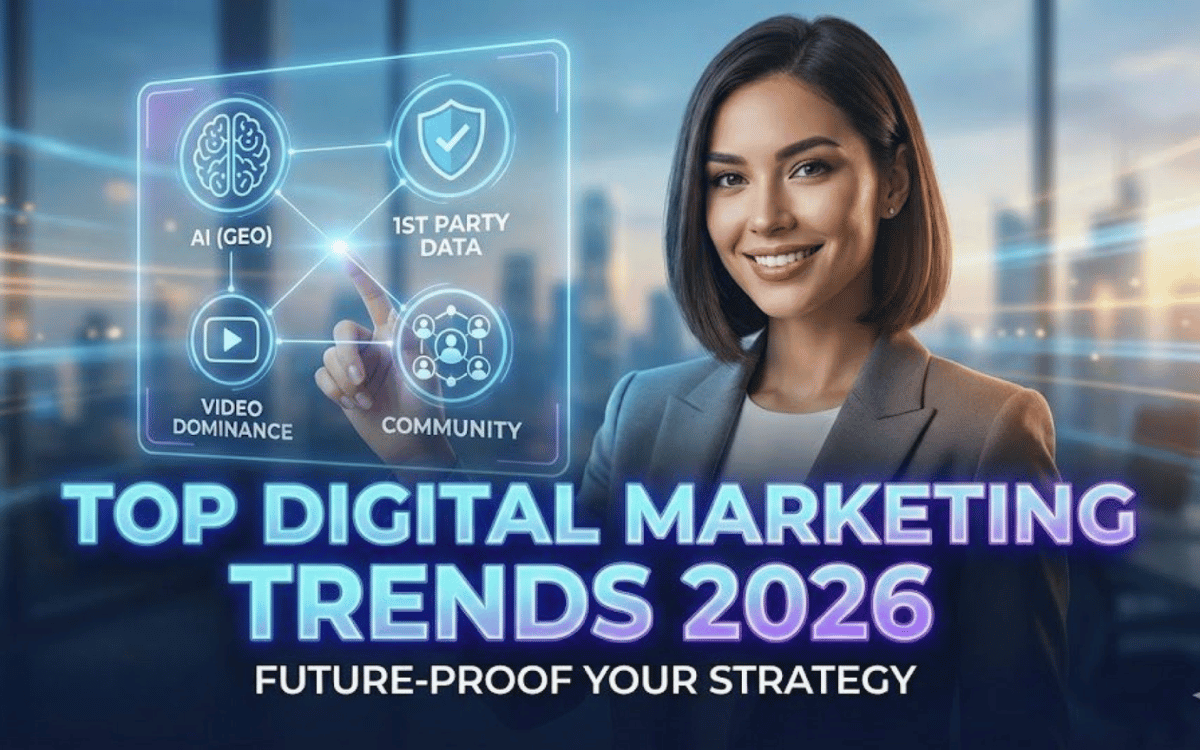
Digital marketing is at the crossroads. As we find our way through the years of 2026, digital marketers find themselves experiencing the most unusual and unprecedented level of transformation because of artificial intelligence, changing legislation regarding privacy, and changing consumer behaviors. A reality where the main goal was to reach and target the audience effectively now requires real engagement, artificial intelligence, and foresight. Understanding this new reality is not only important to be ahead of the game, but to survive as well. The AI Revolution: Experimentation To Execution The future of digital marketing in the year 2026 is inherently shaped by artificial intelligence, which will mature from a research application to a primary operating system. The goal of Meta Platforms is to automatically carry out advertising through artificial intelligence by the end of 2026, where soon the brand will be able to provide the image of the product and the budget to let artificial intelligence create the advertisement, target, and optimize it. What began with creative shortcuts in the year 2025 will culminate in the deployment of fully autonomous marketing activities. Artificial intelligence applications will not only help but design, implement, and optimize overall marketing campaigns with very little human intervention. Online marketing automation will transform and evolve from being based on scheduled processes to the use of self-optimizing systems that both design, execute, and optimize marketing activities based on the real-time channel and timing optimization. However, with the automation that AI brings, there are important challenges too. More than half of the group cite “inaccurate, unreliable, or inconsistent output quality” as the most important limitation of AI-powered tools. Although AI speeds up the process of production, it has not eliminated the need to apply human judgment and strategy. “Organizations that achieve the most success in 2026 adopt a “human-in-the-loop” approach where AI runs at scale and humans decide strategy, prevent bias, and protect brand safety.” Generative Engine Optimization: The New SEO The search strategies in digital marketing are undergoing a radical change in the future. SEO models that were based upon searching a particular set of key words or phrases in search engines for a particular ad campaign are soon going to be replaced by Generative Engine Optimization. The intent would no longer be upon bidding keywords in a ad campaign, but preparing a library that would be used in a search campaign conducted by AI engines. Now, summary results are given for all search questions before users choose to visit websites, resulting in a revolution in traffic patterns. Although AI generates fewer visiting traffics, it is more conversion-oriented. Users search within Chat GPT, Perplexity, and AI Overviews and come back directly to websites for conversion. Therefore, it is crucial to feature within summary results instead of only link performance. The message is clear: it is up to the marketer to create authoritative, person-first content that helps with AI-powered conversational query questions rather than solely thinking about search engines. Rich ecosystems of content, structured data, and entity-filled topical depth become a phenomenal competitive advantage. Privacy-First Marketing: From Compliance to Competitive Advantage The digital marketing landscape is being transformed by a tidal wave of privacy laws. Currently, eight privacy laws are fully up and running at the state level within the US, with plans to enact more by 2026. Other major economies within Asia, including India, Japan, and Sri Lanka, have overall data protection. These developments mean that the EU AI Act is no longer theoretical but practical. It must be noted that these rules and regulations act as more than just hurdles – it acts as catalysts in radical changes to a firm’s strategy. The factors leading to this transition, be it regulations related to privacy, limitations by browsers, or demands by consumers, only lead to acceleration and not reversal. Third-party cookies don’t exist anymore, and tracking anyone through their online presence only deteriorates with each passing day. It leads to a bifurcated market. Successful firms possess best-in-first-party-data skills. They deliver targeting, measurement, and experiences that were unattainable before. Others relying on third-party data face deteriorating results and higher costs. First-party data will transition from a “nice-to-have” resource to the primary currency for personalization. Creating Trust through Transparency The future of digital marketing success is going to be based on clear and transparent value exchanges. The role of marketers will no longer be based on opaque tracking, and instead, they will focus on facilitating the process of value exchange, in which consumers will themselves provide them with information in exchange for personalization and other perks. Studies show that consumers are willing to pay higher to buy products from brands they trust to maintain their data privacy. The collection of zero-party data, or the type of information consumers actively share with the brand, thus becomes the new pivotal competitive tool. Instead of secretly acquiring consumer behavior, the best companies of 2026 establish attractive incentives to share preferences, intentions, and individual information. Clean rooms, in which encryption methods are used to match data records in one set of data with data in another while protecting the privacy of the customers, have seen an enormous adoption rate. All the key advertising players have developed the ability to do clean rooms, and knowing how to use them has become required knowledge for performance marketers. Agentic AI: Marketing’s New Gatekeepers Perhaps the most transformative factor in the future of digital marketing is the emerging reality of Agentic AI – assistant systems. Agentic AI systems have the potential to disrupt digital markets by providing consumers with automated systems capable of researching, comparing, and even making a transaction without having to visit a variety of websites. The Atlas browser by ChatGPT and the browser by Perplexity are examples of this paradigm shift, as they are capable of performing tasks such as searching for products, evaluating alternatives, and even finalizing purchases without the user ever leaving the AI environment. As such, it introduces a whole new level to the marketing technology stack, as it operates as